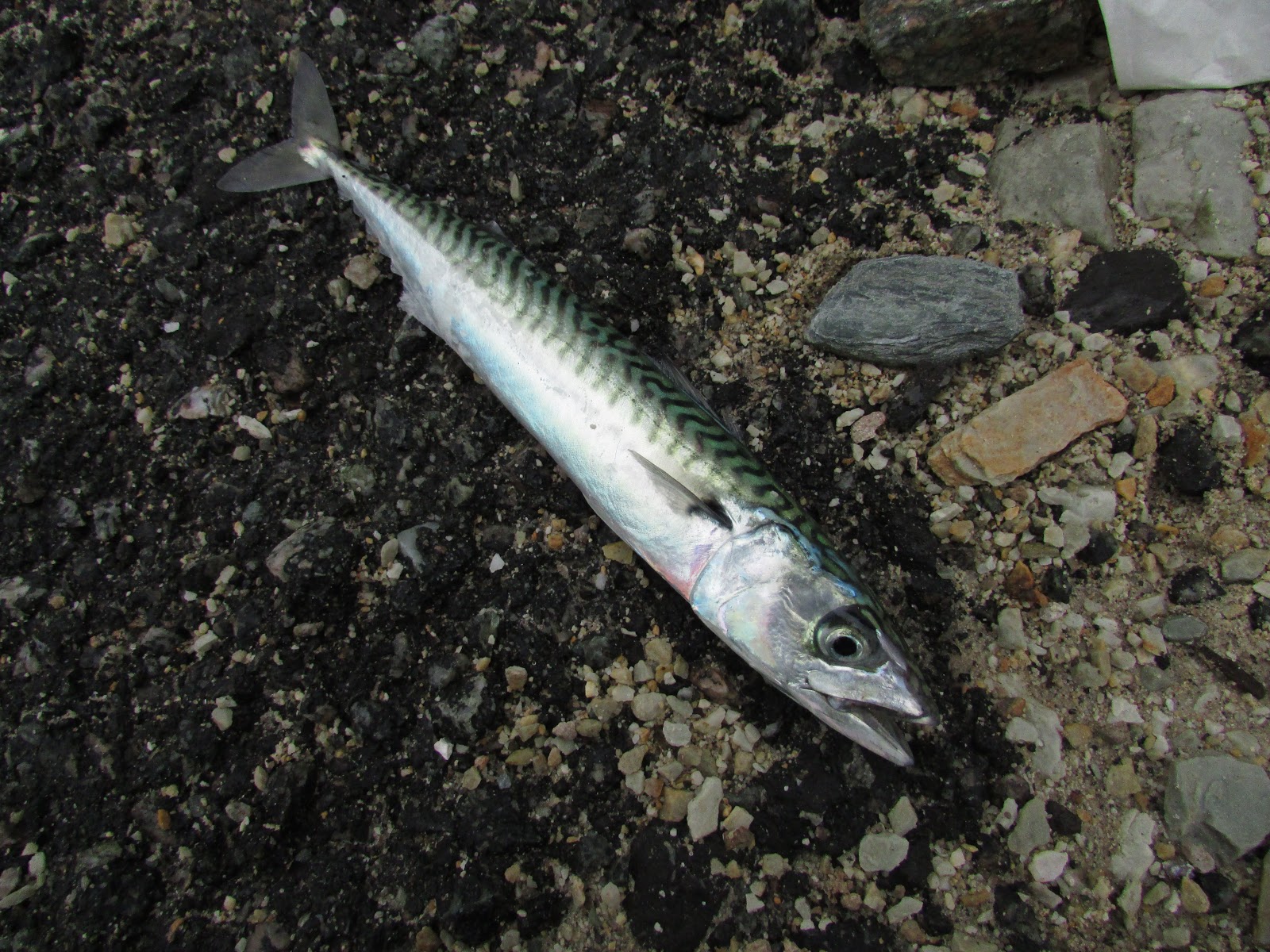
Tuesday, 31 July 2018

July Update

And so to the details of my own sessions.

July continued with what feels like the never ending quest for shore tope. It was back to the beach, but despite plenty of activity in the water again, all that came to the big baits was a couple of huss.

Mullet were high on the agenda, wanting to get them out of the way as soon as possible and get on with hunting a few different species. During a couple of sessions in a creek near Rhosneigr I had them feeding on both occasions. One definite bite but the fish actually snapped me off, where light hooklength had been damaged by a split shot. Plenty of bumps and nudges on the baits but it was almost like carp fishing, they knew the hook was there and they weren't going to be easily fooled.

Other efforts have been put into increasing the species tally for the year, managing two out of three gurnards, a dragonet and first bream of the year, as well as a few gobies from Amlwch breakwater.

It'll be much of the same for the next month or two, mixing in further mullet sessions with the tope, and trying to pick off those last few mini species to give myself the best shot of going for the top prize as we head into autumn. Apologies for the lack of words but the pictures can do most of the talking for this post.


July Guided Fishing Sessions

So its the end of the month so that means its blog time! This month I've decided to split the write up for the guided sessions and my own, to try and lighten the load on the readers!

This month I had three guests along. At the start of the month Steve and Mark came along to a session on Holyhead Breakwater. Both were wanting a similar level of fishing tuition so I covered all the basics; casting, baiting up different baits, basic rig set ups. In order to keep things simple I suggested that the kind of rigs they should start with are 2 or 3 hook flappers and pulley rigs which would cover 90% of their fishing in future. Holyhead Breakwater was the ideal venue to cover a beginners tuition session, I could spread all the gear out, take time explaining various rigs and items, no chance of getting wet and importantly, a very good chance of catching!

The action wasn't as hectic as I thought it might be, however bites were pretty steady. once the bigger rods were put out onto the clean ground in search of a few doggies and whiting, I set the guys up with scratching rods to fish close to the wall. After landing his first doggie, Mark pulled in a steady stream of small wrasse, quickly gaining confidence in baiting up and handling the fish. Despite being just 5 yards apart Steve struggled for bites and was hitting some solid snags.

However, pretty well on high tide he shouted over that he had something on. Watching his line in the water it, whatever he had hooked was taking him for a walk. A quick adjustment to the reel drag and he was able to put more pressure on the fish, guiding to the surface the biggest wrasse I've ever seen. It was a donkey around 4lb. As it tired we walked it over to the steps where I would be able to grab hold of the fish. As it came close I could appreciate the size of the thing, but disaster stuck! The line seemed to catch on the barnacles and before I could get a hold the fish slipped out of sight. I was absolutely gutted for Steve so it was a quick re-rig and off we go again. After a couple of missed bites, he finally had a wrasse, and on last cast got his doggie as well. A successful introduction for both of them to the sport.

My next guest was Tyson from Australia, over visiting his partners family. A mad keen fisher, Tyson said he fishes pretty much everyday back home and was clearly itching to wet a line while over here. He had two targets, bass and pike. While I couldn't help with the pike, I could offer some Anglesey bass guiding. Despite the previous month of glorious weather, the heavens opened by the time we started, and never really let up.

I took Tyson out to a mark I visited a couple of times last year, and while I'd never had more than small pollock here, the ground is so inviting and with it getting dark there's always a chance of a bass. Tyson had managed to pack a few lures that he would usually use for barramundi back home, some of them actually being a Scandinavian brand which are used, I guess, for either pike, pollack, coalies or cod. Rigged on a weighty jig head we heading to promising looking outcrops, fanning casts out to sea and across the little bays formed, working all the gulleys in between.

As we made our way across the terrain, there were some inviting deep holes in the rocks, so I set up a Dolive stick. On dropping into one of these holes I was certain I'd seen a small pollock dart out to investigate. As I was distracted with this I thought I heard Tyson say "fish on" or something to that effect. It took a couple of seconds to register, as it came out of nothing, but the bend in the rod, followed by the splashing on the surface indicated it was indeed bass on! After a spirited scrap I was able to lift the fish out and Tyson had what he came for, and for your first bass on foreign soil it was a fish to be proud of. It was long and lean so I estimated it at 6-7lb, some people fish for 30 years or more and never catch one like that.

Adrenaline now pumping we were keen for more. Unfortunately the dropping tide meant little depth off the end of the rocks, and darkness made it harder to identify potential bass holding points, and we only saw the one fish.

Tyson was back for round two the Monday following. This guided session in the Menai Strait I held a lot more optimism for than before the Friday evening session. It was a promising start, as we arrived down to the mark two other fellas were plugging away, one landed a sea trout, bait fish were shoaling close in and Tyson had an early follow on a deep diving plug. However that was the last of the action we saw. In hindsight, moving down out of the strongest current was the mistake. This moved us away from the bait fish and if there's no prey, there's no predators. A disappointing end to Tysons Anglesey angling sessions but that first fish will live long in my memory.

A couple of guided fishing sessions around Anglesey in the next couple of weeks, but plenty of spaces available for anyone interested in arranging a session.

Friday, 29 June 2018

June Update

As just over a month has gone by, I feel it is time to write up another blog. I don't feel like I've fished anymore than usual, however there have been so many sessions this month its all gone a bit hazy. There has been a few guided fishing sessions for customers, and also I have increased my effort on the species hunting, resisting the temptation to get the lures out for bass at every chance in this fine weather.

Rolling back towards the end of May, myself and Paul looked at having the first serious attempt at getting a tope from the beach. I felt fresh bait would make the difference, and with mackerel being unreliable at the time, I decided on trying to get a garfish as tope bait the day before. It took time, and I'd almost given up of them, but I happened to look up and see the beak of a garfish thrashing the surface. Winding down the slack I was relieved the fish was still there. It came in fairly easily, water temperatures were still down so the fish was quite lethargic but as I lifted it out it was quite clearly something special. I didn't have scales with me but this garfish was as thick as my wrist and close to 3ft long. Eventually back home it weighed in at 1lb 13oz which, as it turned out, is about 4oz off the Welsh record! If only I had scales at the mark! I added another smaller garfish, meaning I had more than enough for bait, and dinner.

Three of us hit the tope mark, myself and Paul were joined by Richard who I've met at Cymyran a couple of times. We fished long into the night, wading, casting then retrieving pretty well until we could take no more. Spider crabs were an absolute nuisance, if fact we were wading through hoards of them that were stationed in 2-3ft of water. A couple of doggies troubled us, before I managed to find a couple of huss on low tide. Unfortunately the piercing sound of a screaming ratchet wasn't heard on this occasion.

The tope quest has taken us to the end of the Llyn Penninsula. On the day we fished conditions started perfect, my flimsy wire was bitten through on the second cast and we were full of optimism. However, apart from doggies we couldn't buy a bite from any pollack or mackerel, before conditions rapidly deteriorated. 20mph+ crosswinds and a steadily increasing swell made things very uncomfortable so we sacked it off a bit earlier than planned. A few small wrasse close in provided the only variety.

A month to the tide almost, myself and Paul tried the beach for them again. This was summer solstice night, and with the clear sky it never got truly dark. It was a similar pattern to the previous session here, except the life that we saw while wading back and forth was incredible. We saw bass, mullet, smelt, weavers, doggies, thornback ray, hermit crabs, spider crabs and a squid all in about 3ft or less of water. Fishing wise we had a couple of doggies and Paul had a small bass on some fresh dug lug. I missed a good run, due to being distracted chasing weavers and smelt for my species tally!

The guided sessions I have had this month have been very tough going. At the beginning of the month I had Kenneth and Dan for some guidance on lure fishing. Despite admiral persistence on what should have been an ideal tide no fish showed to them, or indeed any of the other anglers further up the coast. While frustrating to draw a blank, it was slightly reassuring that the lack of fish wasn't solely down to our methods.

Next up for some guided fishing was Danny, who after trying beach casting had turned to LRF fishing and had some success, though wanted to know if there was anything he could improve to catch more consistently. I admitted that I was still on the learning curve for "pure LRF" but I hoped that with enough different lures or methods I could get him into a few fish. The tides weren't ideal, but the chopping and changing worked and on a dropshotted sandeel section, Danny landed his first pollack. I was disappointed with the lack of action, so I invited Danny out a week later when I would be fishing myself and I could show him how I approach light fishing close in. Unfortunately the weather had other ideas with the wind picking up to the point you could barely stand. All in an effort for 3 wrasse and a pollack over 3-4 hours.

Phew!.. Still with me? There's more..! In between all that I had a few sessions targeting individual species and managed to dink out a cuckoo wrasse, goldsinney wrasse, a tidy flounder to name a few. Oh and on lets say an emotional night, three of us crammed on a rock where there's barely space for one; tripods were kicked, rods dropped, lines tangled, tackle snagged and words sworn
, but the fishing came good. 12 smoothounds between us and a handful of doggies made another late night well worth it!


Sunday, 20 May 2018

Bass Guiding and Species Hunting

After my last blog I had an email from Carl asking for some guidance for himself and mate Glyn on fishing for bass. Neither had caught one before but after success a couple of weeks before I was pretty confident of getting them into some fish. We got down to the mark and set up in plenty of time, although not quite where I first hoped to be. I wasn't expecting much for the first hour or so but that gave me enough time to go through different rigs, preparing baits and approaching different marks for bass, as although they turn up anywhere, almost every mark requires different tactics.

Once the guys were happy preparing crab baits themselves, and negotiating the pincers of some lively ragworm we were able to fish hard, in the hope that with more bait fish around, the bigger fish would start to move through the channel.

Glyn broke his duck early on and followed it up with the first doggie I've seen at this mark, while Carl was having a bit of a harder time, finding snags on more than one occasion, fish coming off in the weed, and bites not developing past the initial rattle. We weren't going to leave until he had one though, so we swapped a big pennel rig for a 3 hook flapper. The change of tactics did the trick and Carl's first bass was landed. Despite steady knocks for the next couple of casts no more fish came and with it getting very late the guys decided it was time to call it a day. Although my own expectations for the session weren't met with the bigger fish again failing to show, the guys were incredibly chuffed to get their first bass a piece, and now they've broke the ice I'm sure more will follow for them.

A couple of days later I decided to revisit the mark, this time using lures to try and tease out a bigger fish. I covered a lot more ground than usual, with the smaller tide the fish wouldn't be as concentrated in the channels so I would have to go looking for them. The improvised patch over my waders just holding the water at bay I was out waist deep, fanning casts out from several spots. It was one of those perfect still, silent nights until a fish broke the surface with a mighty swirl off to my left. I speed retrieved my lure to hit the same spot, only to realise that fish had probably already made an attempt on my lure! Safe to say it didn't return! There was another couple of swirls but I was starting to get frustrated with the lack of hook ups so made my way back the way I came. A change to a more flashy lure did the trick after a few casts I had a hook up. There wasn't much fight but I took it steady until a schoolie about 3/4lb, not much bigger than the lure was on the bank. This was followed by two more the same size. With the feeling that the bigger bass weren't going to show again I made a move, but happy to get my first on a lure this year.

Monster tides at the beginning all this week made planning a bit tricky, but on Monday me and Paul headed out early doors, starting out after bass on the lures before trying for garfish. The water was perfect at our fish mark, just a bit more swell than I would have liked but clarity was good and I was optimistic to say the least. I fished hard as the sun rose, chopping and changing lures but nothing seemed to be happening. As Paul arrived I saw a follow from a fish 1-2lb size and Paul had a follow not long after but still nothing positive. I swapped over to fish a crab bait for a couple of casts and instantly had a series of short rattles. The culprits were confirmed as mirco schoolies again with one hanging off a 2/0 hook and bait nearly as big as it!

We decided to make a move, trying to catch the best part of the tide for garfish. Unfortunately were were already a little late in the tide and no amount of ground bait, lures or bubble floated mackerel strips could tempt them out of the deeper water. The persistent wind in our faces adding chop on the water I feel definitely didn't help. Paul moved to the Straits while I went home for a while and met up with him again later on, but I found myself leaving at what would have been the best time to be fishing.

The next day was another early start, this time back on the rocks trying to get into the rays again and have a little species bash close in. A gnarly swell pushed me away from the ledge I wanted to be on but the higher ledges were safe and I could still fish close without losing too much gear. Action on the big rods was none existent, with just a single doggie. I put this down to the water being so clear and also the May bloom of algae choking the water of oxygen.

With the action far out so slow, I concentrated on bumping up my species count. A couple of ballan wrasse were the first to come, followed by the biggest tompot blenny I've ever seen. Even the action close in was steady so I moved position over a gulley in an effort to tempt further bites. One drop I thought I was snagged on some seaweed so pulled up slightly. There was a bit of weight on I pulled up and there was a fish on. At first glance below I thought it was another ballan but as I lifted it out I was gobsmacked that I had a tadpole fish hanging from the line. Its a fish I've wanted to catch, but had like idea where to start tracking one down, to be effectively handed one like that was a definite bonus! I added a couple of shannies, but I was still riding the high of the tadpole fish.

I made a quick visit to Holyhead Breakwater that day as well, but very clear water and the algal bloom seemed to have put off most of the fish. 3 corkwing wrasse for my efforts saw me return to the rocks, I felt like there was a ray or two out there but time was not on my side and I had to leave before the potentially best time. However theres plenty of time for rays this year, I'll probably never see another tadpole.

At the beginning of the week I had an email from Chris who was keen on some bass lure fishing guidance. After speaking on the phone I felt Chris had plenty of experience lure fishing, and had even fished the mark I was going to take him during the week with some success, but was after a little more local knowledge. We met Friday morning and what a morning it was! Barely a breath of wind, clear skies, sunshine, and the bass were feeding! Most were the seemingly ever present schoolies but he did manage a better fish of 3-4lb which looked great fun on the light trout rod. It was a pleasure to fish that morning with Chris, sharing ideas, techniques, marks, and a few fish; all before most people leave for work in the morning. What its all about and why I started this venture!


Saturday, 28 April 2018

It been a little while...

So I haven't blogged in a couple of months, partly because of a lack of time, partly because there hasn't been much to write about. In those months we've had the beast from the east, which seemed to kill the fishing at the usual marks for this time of year. Post beast I was looking forward to a bonanza but the water temperatures have been slow to pick up, but there has been some excellent ray fishing for those that have been able to time it right and get on the marks when the wind and swell have allowed. 

I managed 1 thornback in that time, but most of my sessions recently have been geared towards bagging an early spotted ray, bass on the lures or finding suitable conger marks. Needless to say those missions have been pretty fruitless though I feel I have learnt a great deal about marks I thought I already knew.

I took a couple of weeks off to tie rigs and prepare for a client session at the weekend just gone. Kyle and Ben were after bass and I was confident I would be able to get them amongst the fish, the question was whether they would be the size I was hoping for. The week before I spent several tides out looking for precious peeler, eventually getting around 20, though most were softies that I froze down to keep them in the best condition. We arrived at the mark in good time, the plan to target flatfish for the first hour and a half before going hard for the bass on the flood. Surprisingly Kyle had a decent bite on his second cast and a schoolie was soon on the beach. Things went pretty quiet for the next couple of hours so I covered a few marks near to where the guys stay on the island. Frustratingly the time I thought we would get the bigger bass came and went
with no interest but as the tide pushed the smaller schoolies came back on the feed. While nothing was over 1/2 lb the guys had plenty of bites for the last hour and by which point were used to baiting up crab, the key bait as we move towards summer.

Tuesday just gone there was a little break in the wind so it was time to make the most of it and get back on the rays. I was sceptical how many would be around but it was a case of get out, catch and get home again, size and number didn't really matter. It was a long day, covering two marks. the first of which bites were hard to come by but changing up the rigs, baits and distance I managed to tempt a few whiting before a dab and a bonus plaice added variety.


Onto mark number two! I got there early enough to secure a decent ledge but I took it steady to begin with, fishing just one rod in an effort to conserve my limited sandeel bait supply. The flapper rigs were bringing in double and trebles of whiting and doggies, and after having a whiting savaged on the hook it went straight back out, resulting in a decent bull huss. As night fell I switched up a gear going two rods out for rays at the best time of the tide. Two guys came and set up above me and just as they did I had a good slack liner. I could feel the "kite like" resistance of a ray and sure enough with not too much fuss a small thornback popped out of the swell.

The doggies were causing a nuisance by this point, and I though it was another one, only staying deep. As it turned out it was a bonus spotted ray. I though I might get one at my first mark but to get it on the species count early was a big plus. I missed a couple of decent slack liners which it unusual for me but happy with getting my targets and kicking off the species hunt competition I packed in. The forecast wind had started to increase and while the swell was manageable white caps on the waves were beginning to form. Not a manic days fishing but good variety and happy to be back amongst the fish!


Thursday, 15 February 2018

13/2/18

So the weather is doing its best lately to clobber most of my fishing plans, and when its not the weather, its the forecasts making conditions out to be a lot worse than they actually are!

Previous to Tuesday I headed out with the intention of trying for codling on the north coast. The forecast was for the wind to veer round to north easterly, therefore making the west coast fishable, but still with a reasonable surf. At least its more comfortable with the wind on your back than in your face. However after driving between two marks and managing a single cast it was obvious that the change in wind had knocked the surf right off, definitely not what I hoped for! I decided to go back to my original plan and headed up north as at least I would still get a couple of hours over high tide. With the wind and the surf coming onto the beach it wasn't the easiest of sessions but at least I could get a line out and I felt more optimistic about catching. The codling didn't show but the rods were kept busy with whiting, regularly coming in as doubles. After all the driving I was more than happy just to be out and catching something!

Onto Tuesday! Again the weather was causing havoc with the planning! Eventually I settled on having a flattie bash around the Straits, before moving to the east coast out of the forecast wind to try for conger. I dug a decent amount of lugworm the day before but unfortunately I didn't get hold of any ragworm before my session. I prefer to have both, incase the fish aren't interested in one on the day.

I wasn't going to let that stop me though, so I made my way to the mark. The wind dropped for the 2 or 3 hours I was in the Straits and the water in front of me was like a mill pond. With sporadic sunshine it finally felt like spring was just around the corner. As I got set up I noticed an empty crab shell and a quick rummage around the seaweed I managed to find two peeler crab. They are like gold dust this time of year so they went in the bucket and all of a sudden my optimism lifted. In the end I threw all manner of baits and rigs in various combinations out and had just a single pull down on a piece of fresh crab.

With no sign of any flatties as the tide increased I stuck on a single big piece of crab as a last throw of the dice. It didn't take long to attract interest but it took a couple of minutes of small knocks before I got the solid thump I was waiting for. A tentative fight began, the fish pretty sluggish in the cold water combined with me being very gentle so not to lose it, but I had the upper had with it soon on the surface. It was safely on dry land now, the first proper bass of the year. Not a monster by any stretch but at about 2 and a 1/2 pounds it was bigger than any bass I've caught this early in the years previous. A couple of photos and it was away again. I had a second last cast with just lugworm and as I thought there was not interest in it, some marks only crab will do and this is one of them.

The East coast was beckoning, so after a quick stop at the takeaway I rolled up to the second mark of the day, where hopefully I would be free of lobster pots unlike last time. Despite looking promising there was very little happening, baits were being ravaged every cast and as the tide run picked up I discovered the culprits were pin whiting. Big or small baits, long or short casts nothing more toothy could be tempted out for dinner. Again I feel the forecasts did me out of going to a more productive mark, with the scheduled 20mph or so winds not feeling anything like that while I was out on the rocks. Still, it gives me a feel of what it would be like, and should those winds be forecast again, I  can make a better judgement of where to fish.

Friday, 2 February 2018

The Grand Tour - Anglesey Style

So this was my long slog of a day on Tuesday just gone. The weather forecasts and the tides on the day didn't lend themselves to anything inspiring to fish for, however after opting to stay in two previous days I had to get out there.

Initially my plan was to head to Amlwch over high water in the morning for some mini species. This changed quickly when I realised the high tide was earlier than I thought it would be. I could have tried it on the ebb but instead opted to try for herring from Holyhead breakwater. The spinning rod and sabiki's were packed and I was off up the A55. I was sceptical about how the wind would affect things, having tried a few times before for herring only to arrive with the wind blowing up a chop on the water, and therefore driving the shoal out of casting range.

As I arrived they was a fella just leaving. He'd been feathering away for a couple of hours for herring and just had the one, reckoning it was better for them over high water. This didn't fill me with confidence at all but I was here now, and wasn't leaving before my evening session. Thankfully conditions were slightly in my favour, the swell and chop were minimal despite the steadily increasing wind, and the water looked reasonably clear. After a bit of a stomp I pitched up by the second bend, reasoning I the wind was more on my back than from the side, and the water being slightly deeper.

I cut down a long sabiki rig to carry just two feathers and started lobbing it out on my spinning rod. Its a shame they don't make these on 40-60lb line so you can give them a real good whack out on a beachcaster, as I think the light weights restricted my casting distance in the wind. I'd moved up and down a few yards from my gear, thinking it was a waste of time, and also remembering the last time I tried this I ended up getting whiting on the feathers.

Out of knowhere I felt the tap-tap of a fish pulling back. It wasn't big, several times I though I had lost it on the retrieve, and coming a relatively long way out made me think it was a whiting. I remained pessimistic until it was on the surface. Its flanks shining much brighter than any whiting I'd seen it was a herring! I held my breath as I brought it up the wall and let out a big sign of relief when I got it on the deck. Success! Quick photo to capture the brilliant colours of the fish and it was back in the water, being on the small side.


Still with time left on the breakwater I carried on with the feathers to prove it wasn't a fluke. Lo and behold a few casts later at the same spot the rod bent round again. This time two herring! Almost as if it was easy now! The chance of adding a bit of variety to the day was beckoning so I tried using tiny pieces of lug on the feathers and dropping them close to the wall. Unfortunately the dropping tide had exposed most of the rocks that line the wall and the mini species had gone into hiding. Given ragworm on a summers day it would have been a different outcome. A few last casts with the feathers on the way back along the breakwater resulted in the surprise catch of the day, a mackerel, before I was off to my second mark.

Point Lynas can be quite exposed, with the headland sticking out off the top of Anglesey but usually provides shelter in South Westerly winds. As I came over the coast road I could see the sea was fairly flat and I had made the right choice to head this way. I got down onto the mark that has produced for me and Paul in the past, but usually at night. I had another issue in that four lobster pot buoys were sitting in front of where I would be casting. To begin with the buoys were out of my casting range so I was happy to fire out a couple of baits. That was until the tide began to turn and the buoys started moving around on their ropes. Swinging maybe 40 metres away from where they began, now putting them in casting range. After nearly losing a full set of gear to one of the pots I decided to pack up. The swell had increased slightly and it would be better to avoid the frustration of hooking pot ropes all evening. I nearly went for another ledge nearby but instead with a bucket of fresh lug went back around the coast road, the other way, to the Straits to tempt a codling or two (hopefully!).

I revisited Moel-y-don, despite it not having really fished very well recently I would give it a try as this time I would be fishing the flood, not the ebb. Arriving to the full force of the south westerlies, everything felt about 10 degrees cooler than at the north of the island. Crabs were going to be a pain so I rigged up a couple of pop up beads to try and lift the bait above them. In the end I fished for about two hours, it rained, alot (!), its was weedy, and generally a pretty uncomfortable time. However I did get my codling, all 6 inches of it! I did get a whiting late on but by now I was wet through (again!) and just beat a hasty retreat. Until next time, when the cod quest continues.

Tuesday, 23 January 2018

First Tuition Session of 2018

After exchanging messages for a couple of weeks, Shane, Rob and a couple of their lads came for some guidance on Saturday just gone. They had a tiny bit of experience between them but were very new to fishing heavy ledgering. Combining all factors, and Shane wasn't sure how long his lad would last I arranged for us to fish Moel y Don on the Menai Strait. Its relatively safe, short distance from the car and a chance of some fish. In order to maximise the possibility of catching we agreed to fish into darkness, however that brings the cold and a lack of light.

With hindsight it would have been better to try somewhere in the day, I think we could have got everyone a properly handle on the casting and see the gear being used. The balance being keeping the kids interested and like I was at that age, having fish biting definitely helps, and best chance of that happening, fish at night. Sadly the fish didn't bite. I was explaining to Shane and Rob about different marks locally when one of the rods started to twitch. Sure enough it was a definite fish bite. As the lads had gone back to the car to get out of the cold, Shane went to get them, before I reeled in one of the smallest codling I've ever seen. I must admit I was quite relieved that I was able to show them a fish, and hopefully that is enough to ignite their enthusiasm for the sport. The Strait doesn't seemed to have fished well recently, I've seen very little coming out and to prove a point yesterday (22/1) I spent a good 4 hours around Menai Bridge without a single bite.

Once they had departed, I headed up the coast to meet Paul for a bash at the coalies. Conditions looked fairly reasonable with a nice swell but not unfishable, and little wind. We got there in plenty of time to fish over high and things started off promising as within an hour we were into whiting and I had a bonus pouting. It wasn't long before Paul holds up a better fish which was our target. We thought we were in for a good night but a couple of whiting later things just went to pot. We couldn't buy a bite until right on high tide Paul had a decent take with something putting up a bit of a fight. Unfortunately it seemed  the line rubbing it against the shingle caused some weakness and a breaking swell snapped his line like cotton. A highly disappointing end as it looked like a reasonable fish.

I had one more cast but in truth I had lost all motivation, figuring we should have caught several coalies by this point. The cold had also become a factor, and it turned out it was the coldest night for 2 years, and it definitely felt it! Sorry for the lack of pictures, camera was way up the beach on both occasions.

First Bassing of the year

Its taken a little while to get round to this but here goes. Last Monday the weather was looking pretty gnarly and I was on a time limit but thankfully the tide coincided just with darkness. I managed to get out to the mark where I was relying on being able to dig my bait there. It was a tough start, I couldn't make out many casts and the worms were generally small, I found a good patch and had enough for the session in about 30 minutes.

I hurried the extra couple of hundred yards over to where I would be fishing, promptly setting up as the tide was already flooding. Being down the bank I was comfortably out of the wind, the rod tips however were shaking all over the place. I'd opted to fish light, bass rods with 2-3oz weights just being enough to hold bottom but a little movement every now and then to help locate any gulleys.

On went the "bait shops" as I call them, small blow lug that you usually get at the shops, and I cast out aiming for the main channel. After missing the first bite I changed to newer, sharper hooks and what do you know, it did the trick. Not a monster, it was never going to be, but the first bass of the year was soon on the sand. Once it was released the action continued, missing a few, landing a few but in all I was pretty chuffed with landing 5 bass, the last 2 being of a better size, maybe 1/2lb at a push.

With the bass out of the way I turned my attention to codling the next day. I fished a mark on the Straits and despite managing to get out of the wind it was bloody freezing! I nearly didn't bother but apparently fortune favours the brave, just no-one told the fish that day. With crabs robbing every bait thrown in, I've never known it so bad, as it got dark something fish shaped hit the surface on the retrieve. Sadly whatever it was bounced off as it hit the rocks. In all likelihood it was a whiting but it would have been nice to have something to show.

Tuesday, 9 January 2018

Start to the New Year

It had been a couple of months since I had managed to wet a line for various reasons. However, with everything largely out of the way it is back to focusing on fishing! The big news that I seemed to miss out on was that due to low numbers in the wild stocks, tackle shops had mostly run out of sandeel late last year. The other big news was that bass fishing would be catch and release only this year which was a big relief to hear, as it meant I can use the new plugging rod I acquired over winter for its main purpose!

Often in January the weather conspires to prevent access to some of the more favourable marks on the more productive tides. However the weekend just gone the storm had past and the wind swung easterly meaning it was time to get out after the rays. In the past I thought January was a bit early for them but the odd one shows up, and after a couple of false starts in the Menai Strait, I was itching for my first proper session of the year.

Its normally pot luck whether the mark I had chosen was already taken but I arrived with no other cars around. I'd arrived early enough to have a pick of the ledges, take my time getting down and setting up in daylight meant I could blow away some of the winter cobwebs. A couple of unnecessary tangles and minor birds nests later I was much more settled come the night shift, setting up three rods, 2 were going for rays, one left very close in after conger and huss. Daylight resulted in a single dab and a few whiting which would be used as bait later on.

There was a lull in activity just after darkness fell. I left a couple of whiting bites to develop, as often rays will take the whiting if you leave it long enough, and for a short while one retrieve felt a little heavy before the weight lifted. Sure enough it was a whiting that had a couple of wounds in the flank where something had tried to make it dinner. I took this as a sign that the bigger fish had switched on, and out went the precious sandeels that I had found in amongst my frozen baits.

I didn't have to wait long and, with a decent pull down a fish was taking line against the ratchet. Being so long since catching rays from deep water I had forgotten what they felt like. Hugging the seabed I felt the strain might pop the line, but once the fish was moving the familiar feeling was back. Rays often stay deep right until the waters edge but soon the unmistakable diamond shape emerged from the depths. A nice fish around 4/5lb and it was mission accomplished.

Then for the next hour I was averaging a ray every 15 minutes, ending up with 5 in a flurry of action, the biggest being possibly 8/9lb. I did take photos of all of them but not many of the photos are great, bit tricky on your own! Activity slowed down after this which is sometimes to be expected here. I was waiting longer for bites and for a couple of casts it was just whiting. My last mistake of the night was to tighten down to a whiting bite and leave the reel in gear. Luckily I was stood by my rod and was able to grab the butt before it ended up in the sea! That was ray number six, and number seven followed on my very last cast, making it a great start to the year.


I had planned on fishing today but unappealing weather and tide times mean catching up with the guiding admin and knocking a few rigs together for future sessions. Till next time, I'm sure it wont be as long!

Monday, 30 October 2017

Little Update

So due to a few reasons I haven't been able to fish or indeed write as much as I would like but I have had a couple of trips out.

Towards the end of September I hit the beach I took Dan and Chris to, hoping again for rays. Conditions weren't ideal but at least they were fishable. An easterly wind had knocked the swell right down and the water was looking very clear. I didn't expect much action with the flat sea, not least from any small eyed rays, and if there were any around it was unlikely they would find the bait with the presence of doggies.

However when its calm there's always a chance of a thornback so I stuck it out a bit longer than usual. As the tide was dropping fast I was wading as far as I could, and sticking to single sandeel to maximise casting distance. I noticed a small rattle which after 10 minutes or so developed into a slack liner. On reeling in though everything went light, and I found I had caught a whiting which had a couple of 'chew' marks on its side. One more cast it was, again at maximum range. The same thing happened, this time a good pull down and I could feel a bit of weight this time. It felt like ages reeling in due to the distance, I don't know how people can fish at 150+ metres every cast in a session - spend more time reeling in than anything else! - but eventually the eyes appeared in the torch light and a reasonable thorny was flapping in the shallows.


After running up and down the beach to get my camera I got a quick photo with it before wading out to release it into deeper water. I packed up satisfied that it wasn't a wasted journey.


Nearly two weeks ago now I returned to the same beach. I was very time limited, planning on 3 hours fishing max over what should be the most productive time. Despite being busy the lull in wind between the two storms was too good an opportunity to miss. On arriving to the beach I found a familiar face set up, it was Richard Butcher who I had seen here a few times over the last couple of years. After a catch up he said the weed had been especially bad, and that he was only casting occasionally to see if it had passed. Not the news I was hoping for but it was great to see him again and having made the effort I set up and got cast out.


Fortunately the weed had eased up by now, though the side currents and undertow made holding bottom a little tricky, even with 7oz weights. With the surf raging I thought there would be a chance of a bass before the rays came on the feed, but everything for the first couple of hours came back untouched. I carried on unfazed as "the window" was fast approaching and sure enough I saw what looked to be a bite, a stronger pull down followed by slack line. Striking in I felt the weight pull out of the sand and that horrible light feeling when there is no fish on the end. I cursed my luck before getting another bait out. Same again, only this time the line is lying virtually on the sand in front of me. I thought it could be the waves pulling the lead out but that would be a much more gradual easing of tension on the line.

I had just cast out a massive sandeel and squid wrap, that soon attracted another slack liner. I wound in as much slack as possible before ripping the rod back as hard as I dared so as not to miss another opportunity. It seemed to work, I could feel a good weight heading off to my right, using the undertow to take a few yards of line. Without rushing I soon had what I had gone for, a decent small eyed ray was on the beach. As my camera had ran out of battery Richard kindly took the photo and sent it over. I had hoped for more, but after two more casts the weed came back with a vengeance. On his last cast Richard also managed a ray. Both of us were happy to catch but given the timing of the session just after the first storm we thought we might have been in for a much more productive evening.

Since then I've had a couple of short lure session but nothing producing. I committed the sin of keeping my head torch on, looking out for signs of bass in the clear water but despite loads of bait fish, and some distant splashes there was nothing going nearby to raise the adrenaline. Thanks for reading, won't be long till I can get out regularly again!

Sunday, 15 October 2017

Species spotlight - Rays

To continue the species spotlight is another popular target, the rays. One of my more regular targets on conventional beachcasting gear, they can be caught almost year round on the island of conditions allow. For the purpose of the article I've lumped them all together, there are 4 realistically catchable species and 2 that turn up very occasionally that I'm yet to encounter.

Thornback rays are by far the most common species found and encountered around Anglesey and North Wales. They are found close to the shore somewhere almost right through the year, however they turn up in biggest numbers from February to May, then again around September and October. The early part of the year I am usually fishing deeper rock marks around rhosneigr. Finding a gap in the weather can often yield several fish in a single session, one memorable session I had 8 fish to 8 and a half pound, although the fella who beat me to the mark had 20! I believe that the fish are so concentrated this time of year to either breed or lay their eggs. Once over they start to spread out and can be caught almost anywhere on the island that you are casting onto open clean ground. I have seen reports of them caught from the beaches in April and May but so far I haven't been able to establish a pattern through my own attempts. Summer months catches seem to be almost accidental but they are around, seemingly at shallower rock marks, again casting onto open sand. The later run sees fish caught from both deep marks and beaches. While not the numbers as in the early part of the  year, catches are pretty reliable. November to February catches become occasional again but possible in the right conditions. My preferred conditions for thornies are calmer the better, certainly off the beaches. At deep water marks a bit of chop or swell doesn't hurt but 3-4ft + swells and murky water seem to put the rays off. Through my catches of the last couple of years, I actually feel more confident fishing clear water for thornbacks. When I target them is entirely mark dependent, certain places fish better on neap tides, others springs but I definitely would try for them at night rather than daytime.

A tough call for the next most common, but I think it is arguably the spotted ray. Not the biggest of rays, a 2lb fish is good for this area, but from certain marks they are a reliable catch through late spring and summer. The odd one is caught in amongst the thornbacks early on, but mid April onwards to late August seems to see better numbers caught. While they do venture into shallow water I'm yet to encounter one in the intertidal like the thornbacks, so I tend to focus on deeper marks in the Trearddur bay and Rhosneigr areas. Like thornbacks I feel confident catching spotties in calmer conditions. I tend to target them in daylight as they seem to feed quite happily, and though I'm sure they would feed at night, the marks I find them tend to be crawling with dogfish at night, and I'd rather wait 3 hours for 1 ray bite than have doggies robbing the baits every ten minutes. The best point in the tide seems to be as the current is picking up or slowing down to about half full strength, so around 1.5 and 4.5 hours into the flood or ebb, but again it is mark dependent.

Small eyed rays are the next most abundant, while they are around there can be big numbers of them, but this is often for fairly short periods of the year. The most reliable time I've found for them is from September to early November they run the west coast beaches. I'm convinced they also run the beaches early in the year in April and May, but despite Paul catching one in April a couple of years ago, attempts since have been thwarted mostly by the weather. They can be a bit picky with the conditions. Too calm or too rough seems to put them off, if you turn up at the beach and there white water as far as the eye can see I would forget it. There is a chance but the conditions make fishing difficult and uncomfortable so I would save my bait for when the swells are between 1 and 3ft high. As usual on shallow beaches night fishing is more reliable but they are caught in the daytime also. I have also caught the odd small eyed from deeper rock marks but not regular enough to say for definite when and where to target them. As their name suggests their eyes are smaller, about half the size, of those on other ray species, and the wing markings are difficult to confuse with anything else.

Blonde rays are the most uncommon of the realistically target-able ray species around​ Anglesey. Realistic because they are there, and a handful are caught, or at least reported each year and this year I was fortunate enough to catch one myself, however small it was! I have been fishing mostly around Trearddur bay, but I have seen and heard off the occasional capture further south at Rhosneigr. It's hard to try and advise on the back of one catch but the information I have read and been told suggests that bigger tides are better and night fishing may produce better fish. I imagine calmer conditions are better also, if only from a safety point of view at least. Small ones are distinguishable from spotted rays by having numerous small eye spots on the wings, and the black spots run to the very edge of the wing while on spotties the spots stop a little short of the very edge.

The other two species are cuckoo ray and stingray. I can think of one example of each being caught on Anglesey since I started fishing, which was a while ago! With a lot of planning and preparation stingrays may be a viable target for someone willing to travel, on or two are caught around Pwllheli and Llanbedrog each year, however I think visiting Barmouth and Fairbourne (where a one time UK shore record was caught) in mid Wales would further enhance a keen anglers chances. Certainly one of my future missions, it didn't quite happen this year. Cuckoo rays tend to be found in deeper water than most of our accessible rock marks give way to. According to studies they do venture inshore for short periods of the year, and the presence of their empty egg cases washed up on beaches confirms this. However it would take many hours to find when and where they appear. One thing for sure if I do happen across one accidentally I'll be writing everything down to see if it happens again!

My usual ray fishing gear is 4-8 oz beachcasters with medium size multiplier or fixed spool reels. 15 to 18lb line with a shockleader for casting up to 7oz is ample, with the weights on the heavy side to gain distance and combat the tide. I have caught rays on my bass rod and flapper rigs but in general I'll use long pulley rigs (3ft hooklength) or up and over rigs around 3-5 ft hooklength to make sure the bait is nailed to the seabed where the rays are most likely to find it. Hooklength I'll use 30lb amnesia usually if theres a chance of bass, occasionally using 60lb as instead of teeth rays have bony sandpaper like pads for crushing prey, and they make short work of light hooklengths. Bait wise I would never go ray fishing without sandeel or squid. Usually double sandeel or sandeel squid wrap does the trick but if bites aren't coming whole squid on its own can catch the odd fish. Mackerel and bluey also have produced for me and I usually find myself alternating baits until I find what's working on the day. Rays also love whiting so I might be worth catching a few on a flapper and filleting them ready for the session. Better still, if you see a whiting bite on your carefully prepared sandeel bait leave it out there, if not a ray, Huss and congers also have a taste for whiting. Just resist the temptation to retrieve too soon as you may rip the whiting away from the bigger fish before it gets hooked.

Hope this gives an insight into Anglesey ray fishing for those wanting to catch their first, or trust them more regularly. They are slow growing and reproducing so it would be great to see as many as possible returned. Cheers for reading!

Tuesday, 10 October 2017

Species spotlight - Bass

While my fishing time will be slightly limited over the next few weeks, I will be writing species guides to many of us fish encountered around Anglesey and North Wales. It didn't take much thinking which would be the first fish under he spotlight - the mighty bass.

When beginning the adventure into guiding I knew bass would be a very popular target. There is a great fasination with them, and they tick all of the boxes; on the right gear they give a great fight, they look good and taste pretty good too if you like to keep the odd one. They also pose a challenge, many anglers including myself have spent hours stood in the surf holding the rod waiting for that telltale thump as a bass takes the bait. To the inexperienced fisherman catching one can feeling impossible task, and those more experienced may turn up at a productive mark in ideal conditions only to draw a blank and be scratching their heads. In this (fairly) brief guide I'll cover as many aspects of bass fishing as I can by drawing on my own experience, going through the methods tend to use at different types of marks, baits and when to fish. Anyone looking for specific marks I'm afraid you're going to be disappointed but my aim is to give you the knowledge to scout and try marks out for yourself.


Thinking back to sessions this year where I've caught bass, either targeted or accidentally there is one common factor - water movement. This means anything from a big spring tide, the incoming (or outgoing) tide through a narrow channel or round a headland, or waves breaking making the water 'fizz'. The amount and type of movement along with the location are linked to other factors such as water clarity and with the weather conditions usually dictate the methods I would use.

It's often written that the period of high tides two days either side of a big spring tide is best for bass. This is true at some marks, as sufficient water covers areas normally inaccessible for the fish to hunt over. Boulder fields, beaches with gulley's close to the high tide mark and narrow creeks and estuaries suddenly become fishable. At shallow rocky areas of open coast the fish will be mooching around boulders and along the margins of rock pools ambushing crabs, shrimps and small fish. Often bass will actually wait in the gulley and deeper pools for the tide and waves to wash a meal towards them. If the water is clear, a lure imitating the natural prey could work a treat while being able to fish a greater area, as there won't be bass in every pool. Otherwise in a rough, dirty sea, a big crab, worm or squid bait would be my preferred approach. The sheltered expansive sand/mudflats at the Bangor end of the Menai Strait also tend to fish better on a bigger tide as you get more time fishing when the water reaches the shingle - wading onto the mud is a definite no no as the water comes in faster than you can move.

Headland marks can range from shallow points at the end of a beach to rock marks that plunge into 30ft or more depth basically at your feet. In strong currents bass will position themselves in pockets of water close to the shore out of the lateral current. If the current is moving right to left it's a sure bet that the bass will sit and wait for a meal on the left side of the headland. With less tide run headlands can still be a great place to target as the fish will pass as they move along the coast, almost acting like a bottleneck. What time is very mark dependent and reliant on doing a bit of homework to find the fish holding features and the best state and size of tide to fish. On the shallower marks light ledgering a worm or crab bait that rolls around a bit can be effective, though if the ground is rough and water clear I would prefer shallow diving lures to reduce tackle losses. Deeper marks I have had results float fishing or deep spinning a sandeel very close to any rock structure. Don't be afraid to try for bass at any mark, if they are caught on beaches a mile either side of a deep rock mark they have to pass there at somepoint.

A host of marks on Anglesey come under the 'narrow channel' category. Parts of the Menai Strait have very narrow shallow channels at low tide, and there are many estuaries that virtually dry out at low tide. These are my favourite areas to fish as they pose a bit of a challenge. The window when the marks are fishable is often short and the window to catch is often shorter, before weed and strong currents make presenting a lure or a bait in a natural way difficult. They all fish slightly differently but I feel most confident fishing the first 2 hours of the flood on medium to neap tides. However in some Menai straits marks I will be persisting later in the tide, as I'm sure that another wave of bass would arrive further into the flood.

Standing in the surf with water lapping over the top of my wellies was where my sea fishing career began. On the mid Wales beaches holding the rod was the way to go, with a tripod more bites were missed than hooked. I find on Anglesey I'm waiting longer for bass bites fishing this way, and when there is a big surf on I'm fishing heavier and further out to find the fish than I would have done previously. I would go as far to say the rougher the sea and dirtier the water the better,certainly if you are fishing daytime. As well as fishing straight off a beach it would always be worth trying rocks adjacent to the beach that are accessible throughout the tide. Often the fish run close to the rocks looking for food washed out, and you aren't moving your gear every 15 minutes. Anglesey usually needs a few days of strong winds to whip up a decent surf and fishing in the middle of the weather can be very productive, but if that's not possible i would aim to fish the first sign that the wind is dropping or changing direction. State of tide depends on the mark but to give myself the best chance of catching at somewhere new I'd start fishing either side of low or high tide. That's usually gives away whether the mark would fish best on the flood or ebb.

So how do I set up for bass? Where possible I use a stiff 9ft plugging rod with 20lb braid for almost everything. I can plug away and if that's not working a quick rummage for a couple of crab and I can be ledgering with 1 or 2 ounce weight. I think I am almost too reliant on this gear when sometimes a light beachcaster and the need for a heavier weight would help hold bottom for longer. Rough weather and pounding surf usually dictates the need for heavier gear and despite feeling a bit overkill would go for 5-7oz capable beachcasters. Rigs are always made simple, either a running ledger with the weight simply slid into the line, or a pulley rig with pennelled hooks up to 4/0 size, even a small bass has no trouble with hooks that big. I have caught bass on all manner of different rigs but these are the two I would use when targeting bass. I can present a reasonable size bait at distance and if I'm going for bass, I'm not usually trying to catch small ones!

Lure fishing is still quite new to me but I've put a lot of hours into it this year. I carry a range of surface sliders and poppers, sub surface and deep divers as well as soft plastics. The ground I've had most success on so far has been shallow so naturally I am slightly biased towards using shallow diving lures. I've also narrowed down the lures I take out to mostly ones that look like natural prey items; mackerel and sandeel patterns are a favourite but also darker lures that look like small Pollack or blennies.

Successful bass fishing is all about being in the right place at the right time. The only way to do that consistently is to do your research on a mark, scout it in the daytime before fishing a range of conditions to find the most productive. Taking notes, both the blanks and catches, will help build a pattern, and I feel this is one reason I've had more success this year than previously. I hope this article has helped inspire a few people to give bass fishing a serious crack. Let them show their muscle on light gear, then give them the respect they deserve by letting them swim off again. Can never fail to bring a smile to your face.

Cheers for reading

Tuesday, 12 September 2017

Recent Sessions

After Dan and Chris's guided session last weekend there was little chance to rest as I had Barry booked in for a guided lure session on the Tuesday. Faced with the same issue of the weather forecast making things tricky to predict, I spent much of Monday and Tuesday morning getting out with the lures at some new marks where hopefully there would be a decent level of water clarity.

During my preparation sessions I came across marks that were full of bait fish, initially I thought the water was dirty before realising it was fish, with mackerel of a range of sizes relentlessly smashing into them. This gave me a fair bit of optimism, and reading a few recent reports suggested that there were bass in amongst the mackerel. I tried a host of lures, different marks and techniques but unfortunately no bass showed for me.

I decided to take Barry into the Swellies, an area of fast currents and rocky pinnacles, situated between the two bridges that span the Menai Strait. We were starting around low tide and the current had yet to get going properly. We had some nice areas of slack water and eddies in front of us so I instructed Barry to go for casts around these regions. The thinking being that the bass would be sitting out of the main flow waiting for the current to bring them their meal.

Looking in the water it was obvious there was a lot of bait fish around even here, and not long after starting fishing the water in front of us erupted as they made a desperate attempt to reach freedom. While Barry carried on with the surface and shallow diving lures, I stuck on a long silver bar spinner to see what was causing the commotion. As expected it was a mackerel, and a really small one at that, perfect live bait size and I was hopeful that the bass would be following up the shoal. In between using his own lures I gave Barry a couple of mine to try, the main ones being the IMA Narbarone and Maria Angel kiss sandeel due to their action and likeness to potential prey at the time.

Despite walking up and down the bank there was no sign of any bass, and as the current got stronger the areas of slack water were severely reduced. With my confidence in the mark fading we made a move up towards Penmon where hopefully the water would still be clear and over high tide we could fish shallow diving lures over the rocky ground without too much risk of snagging.

In short, nothing happened. The water looked good but it was a case of being in the right place right time and sadly we weren't. I was determined to find Barry a fish, however with a long drive back he, quite sensibly called it a night. I'm certain that the fish would have turned up at some point but that could have been long into the night.

With the frustration of not being able to provide Barry a fish I got back on the lures over this weekend. I revisited Penmon, but faced with completely different, very murky conditions I decided not to waste much time there, heading back to the Swellies just on the turn of the tide. I lost faith in the lures pretty quickly and after a quick rummage I found a few late season peeler crabs. These were lashed on and just lobbed out, again aiming for calmer areas of water. It wasn't to be though, as either wrasse or blennies were stripping the baits in seconds, thats if I managed to get the gear back at all.

After stopping in Menai Kayak Angling for a bit of up to date information and a couple of new lures I was back in the Swellies for the slack water again. Admittedly I wasn't particularly confident again and as expected I drew a blank. It is, however all learning, it has taken people years to master fishing within even this short stretch of water and it will be the same for me and hopefully the hard work will pay off in the long run. In addition it has apparently been hard going for many fishers in the area. Dave in Menai Kayak Angling suggested that the abundance of baitfish and small mackerel mean that the bass have simply gorged until full up, and a bass that isn't hungry is less likely to make an instinctive strike at a lure. Lastly the rain that fell early in the week may have had an impact, as all that freshwater would now have worked its way into the Straits, and that might partly explain why the water clarity was slightly reduced on Monday compared with Saturday.

I may be completely wrong with these thoughts but persistence will definitely pay!

Monday, 4 September 2017

2/9/17 - Guiding

Saturday just gone I had a couple of guests, Dan and Chris, who had booked in a session a few weeks ago. In an effort to give them as much preparation time as possible I was keeping close watch on the weather forecast which would likely have the deciding factor where we would fish. Unfortunately due to the storm activity in the Atlantic, the weekend forecast was changing pretty much by the hour. There were several possibilities but in the end I opted for Cymyran, as the building wind and waves would possibly bring us a few schoolies and an early ray. Both guys were experienced all round fishermen, however with sea fishing they had fished mostly the same places and caught mostly the same species. The plan here being to take them to a new mark, and try for a different species.

We met at the beach late afternoon. I was still unsure about fishing here until popping my head over the top I could see a decent area of breaking waves, but not so far out that they would have trouble casting. As an added bonus the wind was coming straight onto the beach and was definitely not as bad as expected. Once suited and booted we headed off down the beach.

Both were well prepared for the session, having tied up plenty of pulley and up and over rigs which are my preference to use when fishing for rays. To start with they fished one each for rays, and I recommended having one flapper out to try and tempt any schoolies or flatties which given the surf should have been running close inshore. As darkness came on we would swap to fishing big sandeel or crab baits for rays, bass and occasional smoothound that run the beach.

It wasn't long after first casts were made and Chris was scrambling back to his rod. Waiting a few seconds before striking it was clear that the fish had made good its escape with a chunk of squid. A few minutes into the next cast and he had another obvious bite that we all saw. It was slightly tense on reeling in, the fish didn't appear to be on again, the only sensation being the grip lead bouncing along the sand ripples. As his leader knot appeared it was a relief to see small splashing in the shallows, and he lifted up a little schoolie bass. With neither of the guys having caught a bass before I was chuffed that was the first fish of the evening.

With that I thought there would have been a few more schoolies out there, so keep the guys using flapper rigs a bit longer but no more fish obliged. As night fell, if we were going to get a ray this would be the window, so both Dan and Chris swapped both rods back onto pulley and up and over rigs using mostly double sandeel, and using the occasional softie crab to maximise our chances.

Sadly no more fish showed. The wind increased and started coming across us which might have hampered casting distance and we simply weren't able to reach the fish, or they simply weren't there. I think it was a case of the latter, as with the range of baits and rigs cast out they had covered almost all bases, and wading out certainly helped gain valuable yards on the cast. With no obvious signs of movement and the weather now uncomfortable the guys made the decision of making last casts before the long drive back for them. They had a great time, the aim was always to take them to a new mark and try a different way of fishing but I couldn't help feeling a little disappointed that no more fish turned up. However they can take the knowledge away, and if they fish the same mark the same way in a couple of weeks they might bag up on rays.

The evening conditions were a complete contrast to the morning, I finished a night shift at 8am and with the lures already in the car I set off to explore a new area of the coast. While chucking the lures around I spotted a decent wrasse swimming around the boulders almost at my feet. The only option I had was to freeline a couple of limpets into a hole and it didn't take long before the line tightened. It was a good fish, and clearly the water was a reasonable depth under the boulder but after 3 or 4 dives it was under control and posing for a photo.

Next up is another guest tomorrow for some lure fishing this time, so plenty of exploring today and tomorrow morning, the weather again making things tricky

!